This page records what can be known today about his last days. It draws on documents kept by the family and on the war diaries of the Canadian troops his battalion fought that day. For the first time, both sides of the same morning can be read side by side.
Otto Neubauer served in the army of a state that waged a criminal war of aggression. This page remembers a person and the circumstances of his death. It does not glorify the war.
Life
From teacher to battalion commander
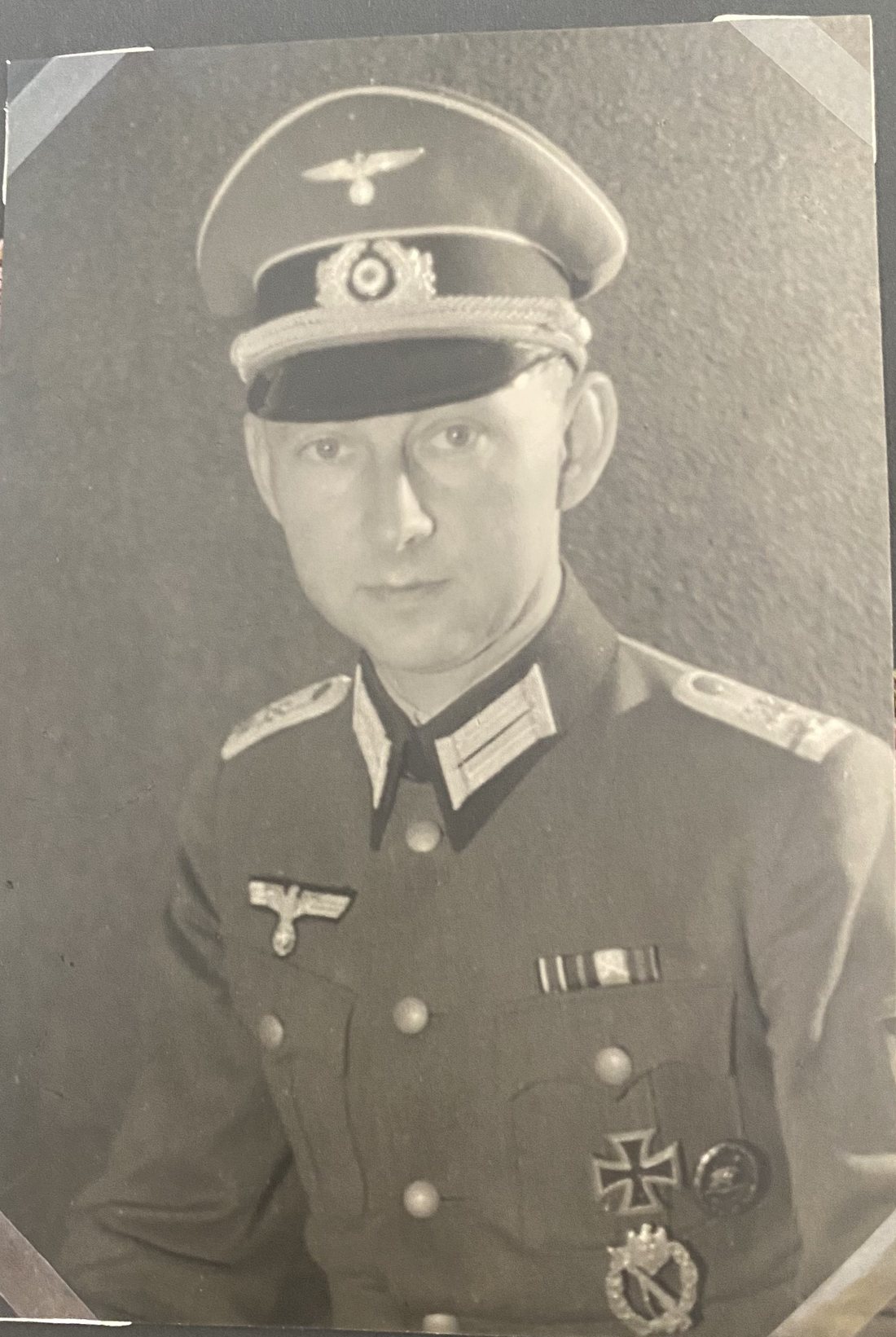
Otto Paul Rudolf Neubauer was born on 20 January 1904 in Ossowo, in the district of Preußisch Stargard. His father was a postal official. Otto became a teacher and lived with his wife Herta and their three children in Fürstenwalde (Spree).
From 1935 he trained as a reservist. When the war began he was called up to Infantry Regiment 122 of the 50th Infantry Division. He fought in France, on the Eastern Front and in the Crimea, was wounded in January 1942 and was decorated several times. In the summer of 1943 he was posted to the occupied Netherlands, to Grenadier Regiment 743 of the 719th Infantry Division.
- 1935First reserve training, officer candidate
- 26 Aug 1939Called up to Infantry Regiment 122
- 1 Aug 1940Lieutenant of the reserve, after the campaign in France
- 1941–1942Platoon and company commander on the Eastern Front and in the Crimea; Iron Cross 1st Class; wounded on 7 January 1942
- July 1943Posted to the Netherlands, Grenadier Regiment 743
- 15 Jan 1944Commander of the 1st Battalion
- 1 Apr 1944Captain of the reserve
- 4 Sep 1944His battalion is the first of the division to reach Antwerp
- 22 Sep 1944Killed near Wijnegem
Belgium in mid-September 1944
A front forms on the Albert Canal
In early September 1944 the German front in northern France collapsed. On 4 September British tanks reached Antwerp. The largest port in Western Europe fell into Allied hands almost undamaged, and Belgian resistance fighters secured bridges over the Albert Canal at Merksem and Wijnegem the same day.
Then the advance stalled. The port was useless as long as the Germans held the mouth of the Scheldt. The German command rushed whatever it had to the Albert Canal: paratroopers, remnants of broken divisions and the 719th Infantry Division. That division had been guarding the Dutch coast and was equipped for static defence, not mobile warfare. Otto Neubauer's regiment came to Belgium with it.
Otto's battalion was the first of the division to reach the Albert Canal. On 4 September 1944, the day British tanks entered Antwerp, the 719th Division was ordered south from the Netherlands in great haste. It had hardly any vehicles of its own; the corps requisitioned buses, trains and private cars. That morning the divisional staff reported that only Neubauer's battalion and one artillery battery could reach Antwerp the same day, because they were already at Steenbergen, some forty kilometres to the north. A corporal of the 4th Company, part of Otto's battalion, wrote in his diary that day, a diary that later fell into Canadian hands:
"Receive my Panzerfäuste in very bad condition at the harbour of Schiedam … To Roosendaal by train. From there further progress by rail is impossible. Wild flight along the rail and roads, Luftwaffe and Marine! Thousands of officers are trying to save their lives. March to Antwerp. Complete disorder. We have to protect the retreat of these cowardly bastards."
As translated in the Canadian intelligence summary no. 99 of First Canadian Army, 7 October 1944, quoted by Jack Didden. The German original is in the Canadian files.
On 13 September German troops destroyed a first Allied bridgehead at Wijnegem. On 16 September the 2nd Canadian Infantry Division took over the sector around Antwerp. From 17 September, Operation Market Garden further east drew supplies and attention. On 18 September the 5th Canadian Infantry Brigade, made up of the Black Watch, the Régiment de Maisonneuve and the Calgary Highlanders, took up positions on the south bank of the canal at Wommelgem, directly opposite Wijnegem.
On the other side lay Otto Neubauer's 1st Battalion. Prisoners later put its strength at 500 to 550 men. Their orders were to hold the north bank until 25 September.
The setting: the Albert Canal at Wijnegem
Locks, meadows, a château and a fort
The Albert Canal links Antwerp with Liège and was built in the 1930s. East of Antwerp it runs dead straight through flat country of meadows, copses and estates. At Wijnegem there is a set of locks. In September 1944 their gates were damaged, and that is exactly where the Canadians looked for their crossing. The canal is about 27 metres wide here.
South of the canal lies Fort 1, part of Antwerp's old ring of forts. The Calgary Highlanders assembled there on the evening of 21 September. North of the locks stood the Château Helleputte, which the Canadians took over as their headquarters on the evening of 22 September. The road from Wijnegem to Schilde crosses the canal right at the locks.
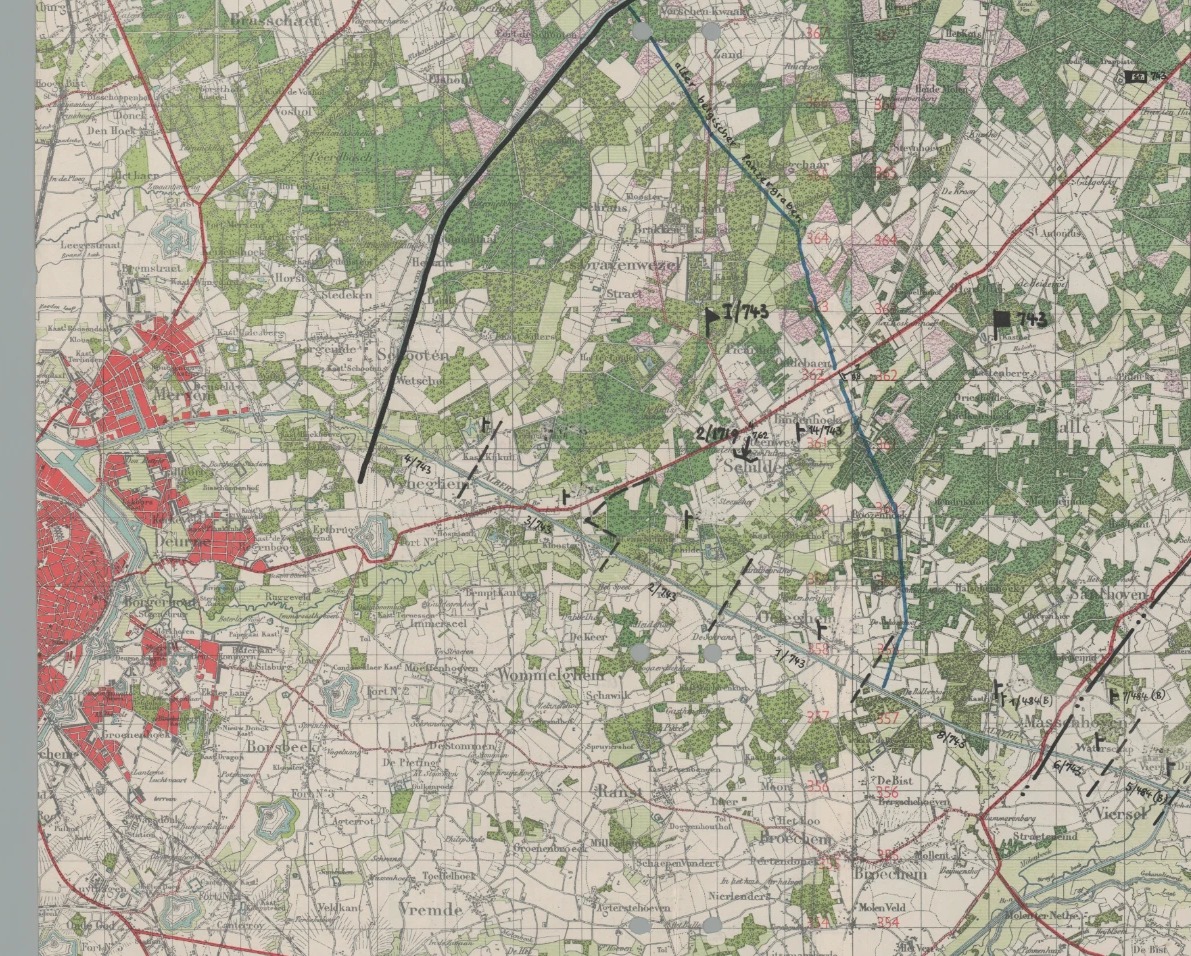
How Otto Neubauer's battalion was deployed on the eve of the attack is shown by a corps situation map dated 21 September. The 1st Battalion held the division's right wing; the sector boundary ran immediately west of Wijnegem. The 4th Company lay on the canal west of the village, the 3rd Company east of the bridge on the road to Schilde, the 2nd Company further east at Het Speet, the 1st Company towards Oelegem. Otto's command post was north of Schilde near 's-Gravenwezel, about three kilometres behind the canal, with the regimental staff further east. At the locks the Canadians thus struck exactly the seam between the 4th and 3rd Companies.
22 September 1944
How Otto Neubauer died
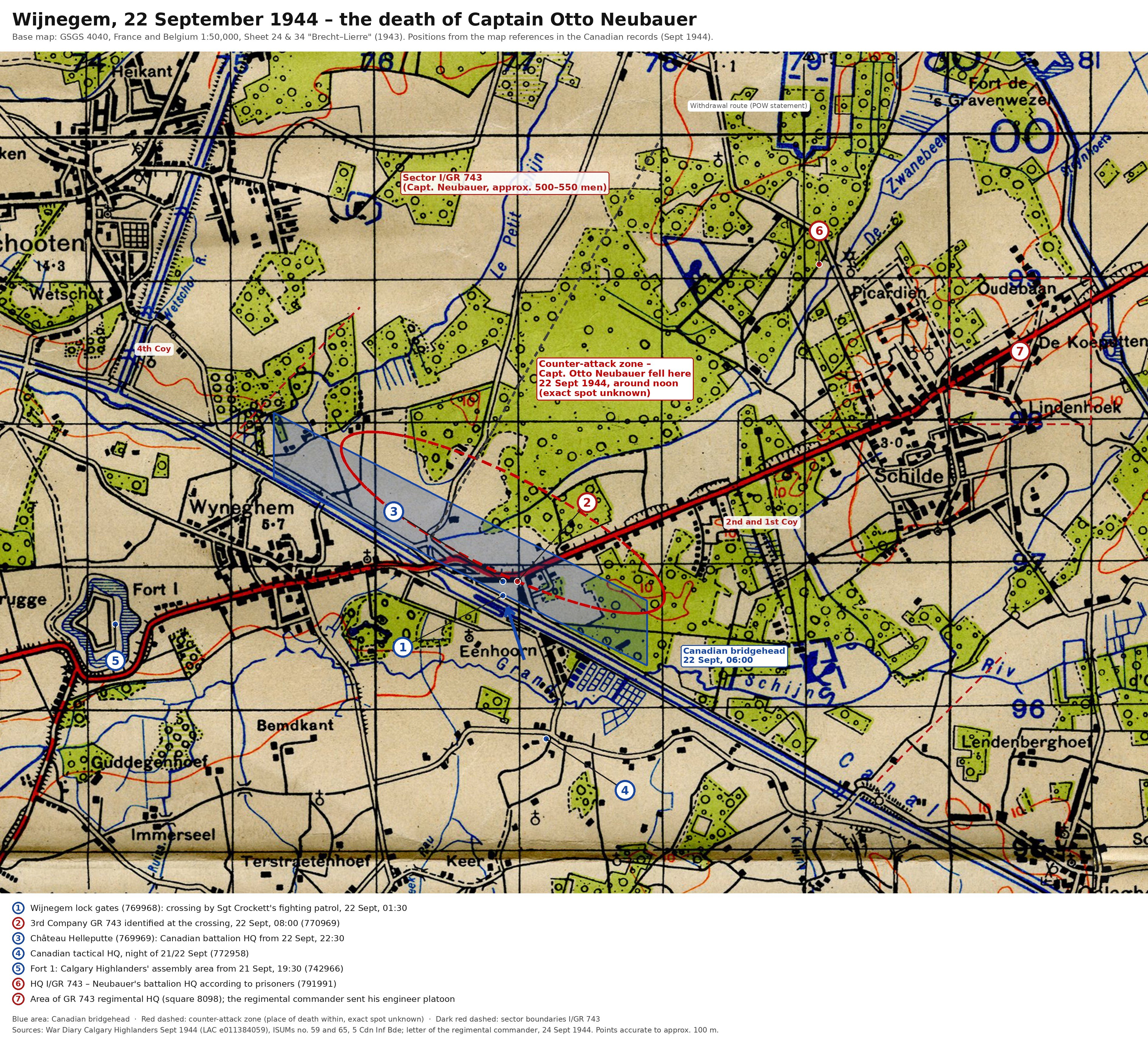
A first Canadian attempt had failed on the night of 20 to 21 September. The second came the following night. At 1:30 a.m. a fighting patrol of eight Calgary Highlanders under Sergeant Ken Crockett crept across the damaged lock gates, the last few metres along a single pipe. On the north bank a flare went up and German machine guns opened fire. Crockett and his men knocked out three machine-gun posts and held on until reinforcements came across.
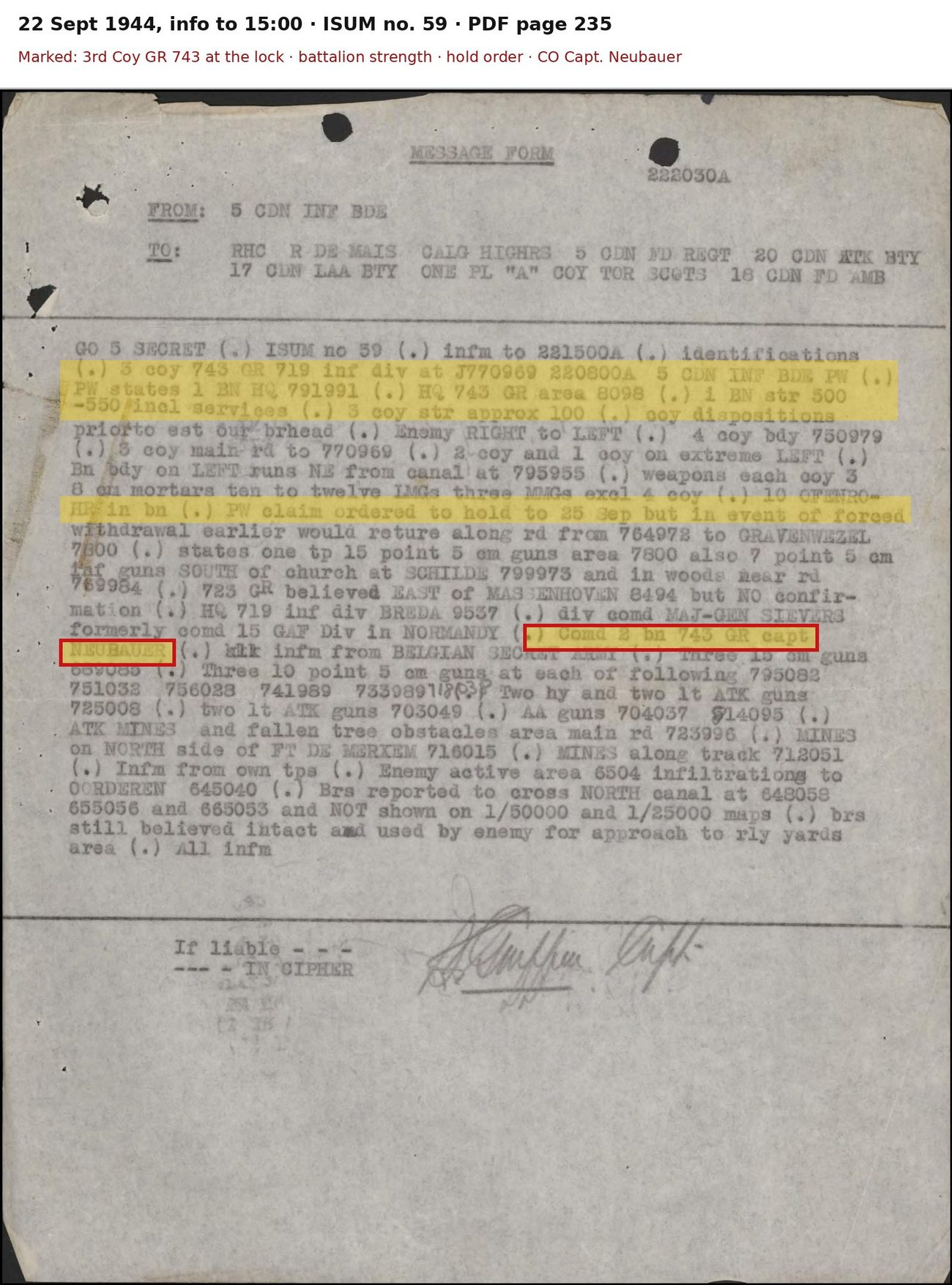
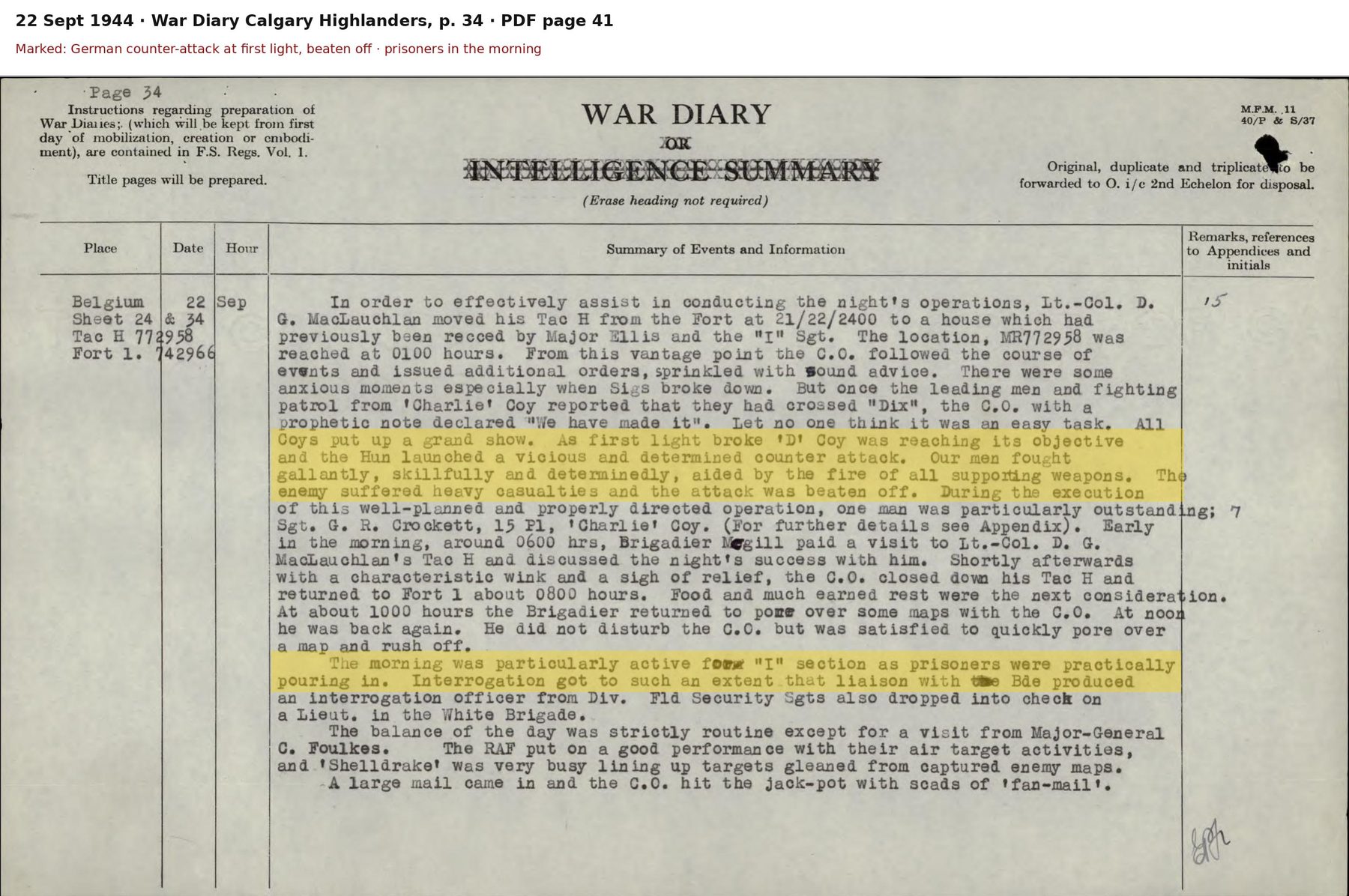
By 6 a.m. three Canadian companies stood on the north bank. At 8 a.m. they identified the 3rd Company of Neubauer's battalion at the crossing. At first light the Germans counter-attacked the bridgehead, "vicious and determined" in the words of the Canadian war diary. The attack was beaten off with heavy losses. All morning the bridgehead lay under mortar and artillery fire, and German prisoners were "practically pouring in".
- 21 Sep, morningCorps is allowed to withdraw behind the Antwerp–Turnhout Canal
- 21 Sep, 19:30Canadians occupy Fort 1
- 22 Sep, 01:30Patrol crosses the lock gates
- 06:00Three companies on the north bank
- First lightGerman counter-attack, beaten off
- 08:003rd Company GR 743 identified at the locks
- 08:55719th Division reports to corps: counter-attack with two and a half companies and the regimental engineer platoon; artillery blind in fog
- 11:15719th Division reports to corps: commander of I./743 killed, regimental commander leading himself
- Around noonOtto Neubauer is killed
- NoonGerman artillery withdraws
- 16:45Corps evening report: bridgehead reinforced to two or three companies
- 19:00Canadian bridge across the canal complete
- 23 Sep, early719th Division headquarters moves to Alphen (Netherlands)
- 23 Sep, morningCanadians find the north bank abandoned
Around noon
What happened next is described by his regimental commander two days later, in a letter to Herta Neubauer. Otto was leading his battalion in the fight for the bridgehead. Shortly before, he had spoken by telephone with the commander, who sent him his engineer platoon as support. When the engineers arrived, Otto left cover to brief them. A burst of machine-gun fire hit him.
He lay only five metres from the house used as a company command post. His men could not recover him. A sergeant of his battalion was killed trying.
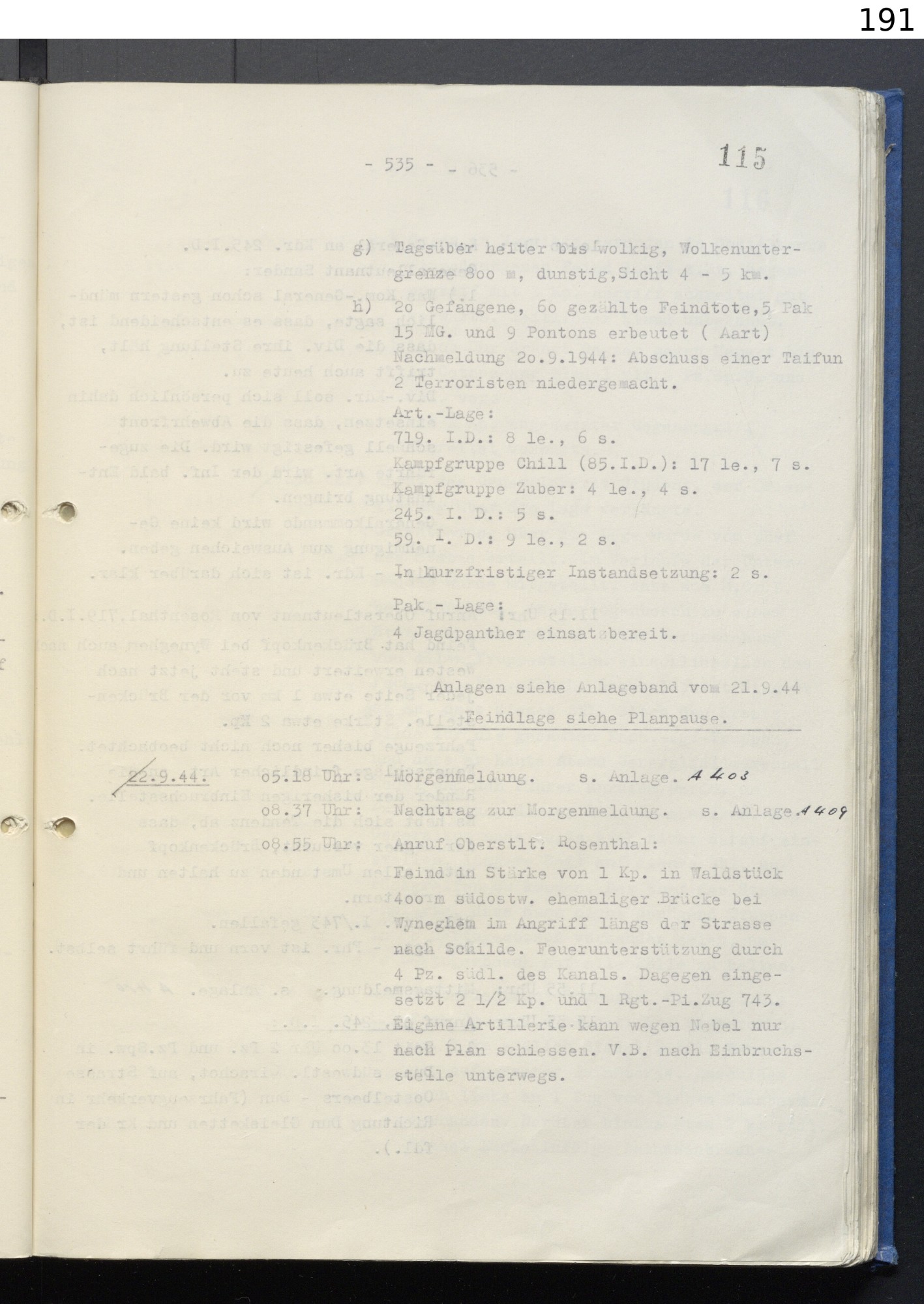
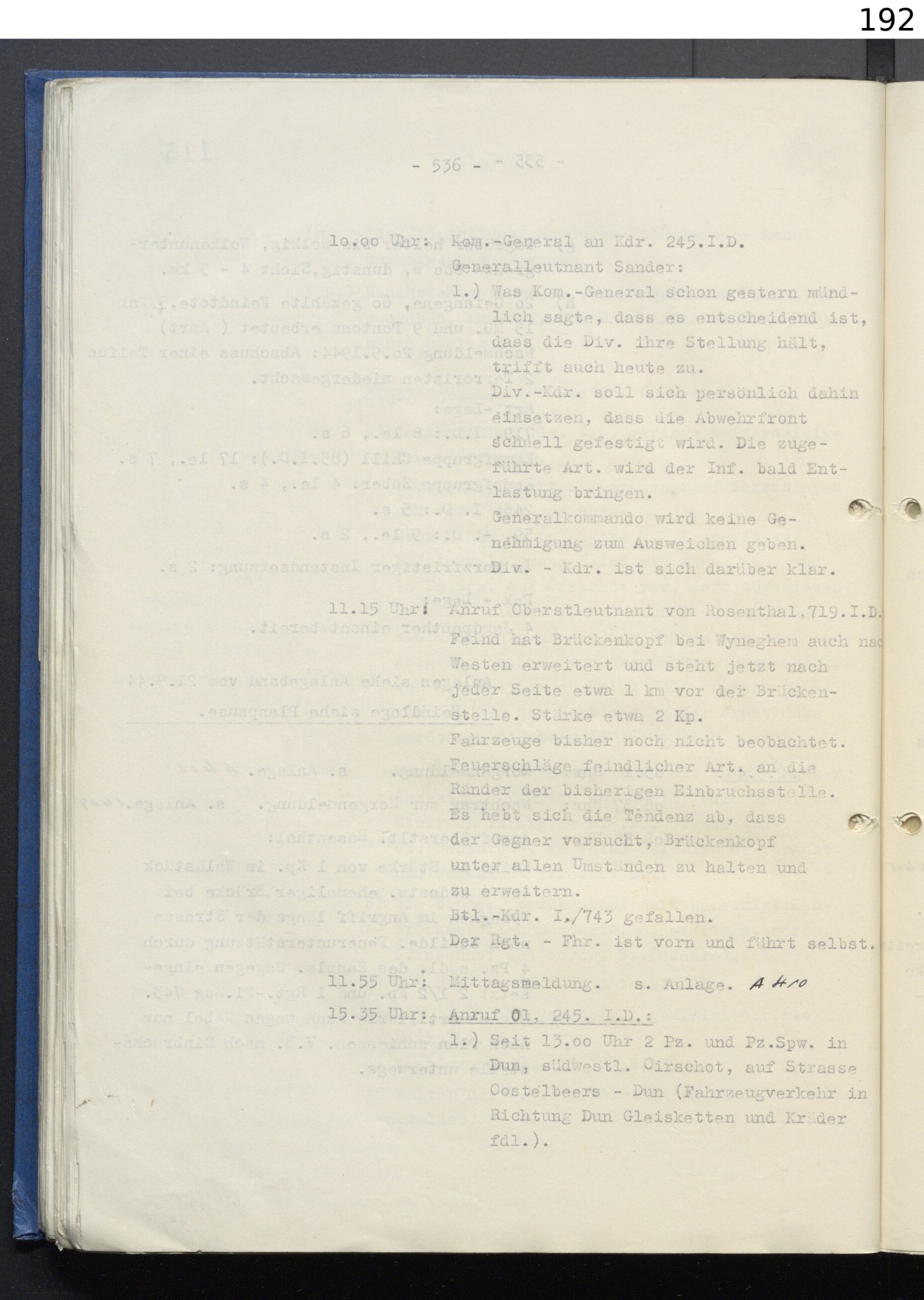
The German command recorded what was happening at the canal as well. The war diary of LXXXVIII Corps, to which the 719th Division belonged, records two telephone calls on 22 September from Lieutenant-Colonel von Rosenthal of the divisional staff. The first, at 08:55:
"Feind in Stärke von 1 Kp. in Waldstück 400 m südostw. ehemaliger Brücke bei Wyneghem im Angriff längs der Strasse nach Schilde. Feuerunterstützung durch 4 Pz. südl. des Kanals. Dagegen eingesetzt 2 1/2 Kp. und 1 Rgt.-Pi.Zug 743. Eigene Artillerie kann wegen Nebel nur nach Plan schiessen. V.B. nach Einbruchsstelle unterwegs."
In translation: enemy about one company strong in a wood 400 m from the former bridge at Wijnegem, attacking along the road to Schilde, with fire support from four tanks south of the canal; committed against them, two and a half companies and one regimental engineer platoon of Regiment 743; own artillery can only fire by plan because of fog; a forward observer is on his way to the penetration. Here is the regimental engineer platoon named in the letter to Herta Neubauer: Bosselmann had sent it against the bridgehead together with two and a half companies, and Otto was killed as he went to brief it. The fog that forced the German artillery to fire "by plan", without observation, is the same fog the Canadian reports mention. A good two hours later came the second call, at 11:15:
"Feind hat Brückenkopf bei Wyneghem auch nach Westen erweitert und steht jetzt nach jeder Seite etwa 1 km vor der Brückenstelle. Stärke etwa 2 Kp. Fahrzeuge bisher noch nicht beobachtet. Feuerschläge feindlicher Art. an die Ränder der bisherigen Einbruchsstelle. Es hebt sich die Tendenz ab, dass der Gegner versucht, Brückenkopf unter allen Umständen zu halten und zu erweitern. Btl.-Kdr. I./743 gefallen. Der Rgt.-Fhr. ist vorn und führt selbst."
In translation: the enemy has extended the bridgehead at Wijnegem to the west as well and now stands about a kilometre from the crossing on either side, with a strength of about two companies; no vehicles observed so far; enemy artillery concentrations on the edges of the penetration; the enemy is evidently trying to hold and expand the bridgehead at all costs. Then two sentences in the flat language of a staff officer: "Battalion commander I./743 killed. The regimental commander is forward and leading himself." The commander of the 1st Battalion was dead, and Colonel Bosselmann had gone forward to take over. The report reached the corps at 11:15, so Otto had fallen shortly before, on a morning the corps logged as "overcast". As early as 16:45 the corps reported to First Parachute Army that the bridgehead had been reinforced to two or three companies, with the German positions under artillery fire, tank fire and strafing; the daily report at 19:30 repeated the finding. His death is thus documented by three independent sources: the commander's letter, the Canadian files and the corps war diary. The war diary explicitly names the 1st Battalion.
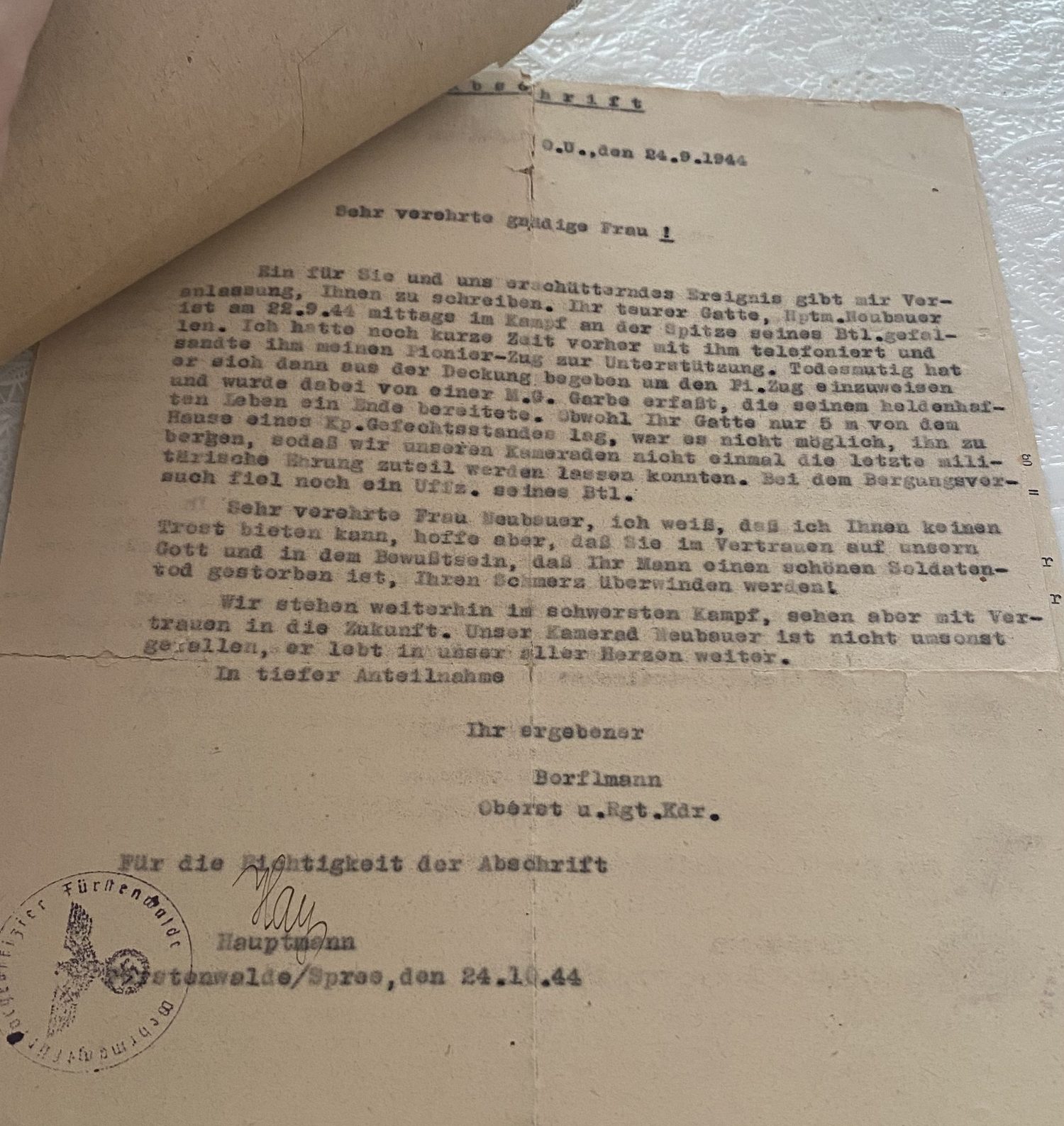
Dear Madam,
An event that is deeply shocking for you and for us gives me cause to write to you. Your beloved husband, Captain Neubauer, fell at noon on 22 September 1944 in combat at the head of his battalion. I had spoken with him on the telephone a short time before and sent him my engineer platoon as support. With no regard for death he then left cover to brief the engineer platoon, and was struck by a burst of machine-gun fire that ended his heroic life. Although your husband lay only 5 metres from the house of a company command post, it was not possible to recover him, so that we could not even give our comrade the last military honours. A sergeant of his battalion was also killed in the attempt to recover him.
Dear Mrs Neubauer, I know that I cannot offer you any comfort, but I hope that, trusting in our God and knowing that your husband died a fine soldier's death, you will overcome your grief!
We remain in the heaviest fighting, but look to the future with confidence. Our comrade Neubauer did not fall in vain; he lives on in all our hearts.
With deepest sympathy,
Yours faithfully, Bosselmann, Colonel and Regimental Commander
Translated from the German. The signatory is Colonel Bosselmann, commander of Grenadier Regiment 743; the copy misspells his name as "Borflmann". Letters like this followed set formulas ("a fine soldier's death", "did not fall in vain"). The concrete details, however, match the Canadian files and the corps war diary.
What the Canadians recorded
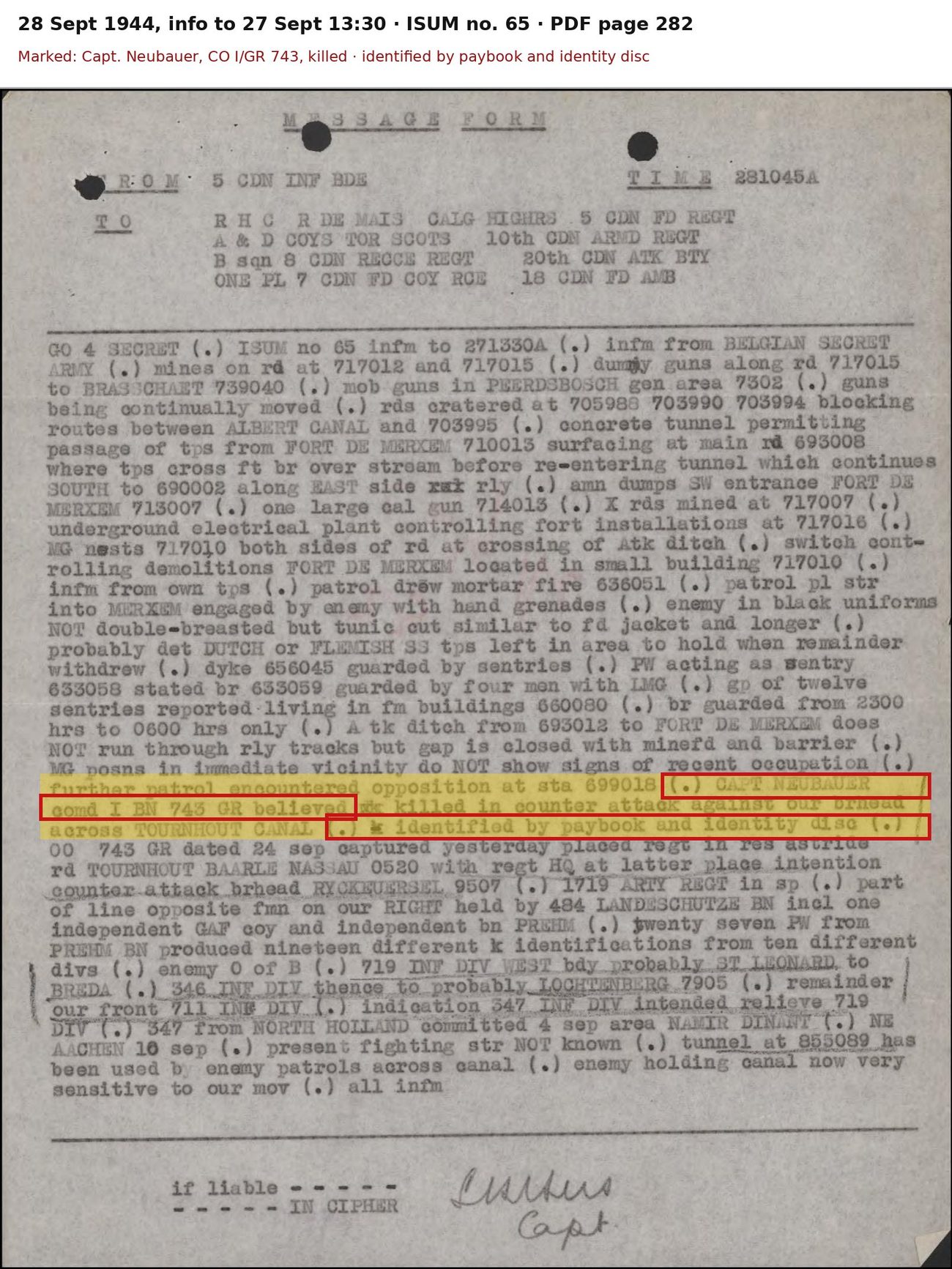
The intelligence officers of the 5th Canadian Brigade knew their opponent by name. Their intelligence summary for the afternoon of 22 September names "capt Neubauer" as battalion commander. The summary of 28 September reports him killed:
"CAPT NEUBAUER comd I BN 743 GR believed killed in counter attack against our brhead … identified by paybook and identity disc"
His body had remained on ground now held by the Canadians. They evidently took his paybook and identity disc: a brigade order of 20 September explicitly required troops to collect the paybooks of enemy dead and pass them back.
The bridgehead came at a high price for the Canadians too: the Calgary Highlanders lost 15 killed and 34 wounded on 22 September.
The order to withdraw
What Otto and his men could not know that morning: they were fighting for a line that had already been given up. On the morning of 21 September, Field Marshal Model had allowed the corps to fall back behind the Antwerp–Turnhout Canal in order to free troops against the Allied thrust at Eindhoven. The corps commander, General Reinhard, decided to begin disengaging after dark on the evening of 22 September.
The German artillery had to be in new positions by the next morning and had therefore already left by noon on the 22nd. That explains what puzzled the Canadians in the afternoon: the mortar and shell fire died away, and the engineers could build their bridge undisturbed. Outwardly the corps kept up the line: its daily report on the evening of 22 September reads "hold the position", and measures to seal off the bridgehead were "in progress". But the same report already lists the new command posts, all in the Netherlands: the corps at Dongen, the 719th Division at Alphen from early on 23 September. On the morning of 23 September the Canadians found the ground north of the canal abandoned. Regiment 743 fought on a week later at Merksplas, where it lost dozens more men.
After 22 September
An unknown soldier and a cross with a name
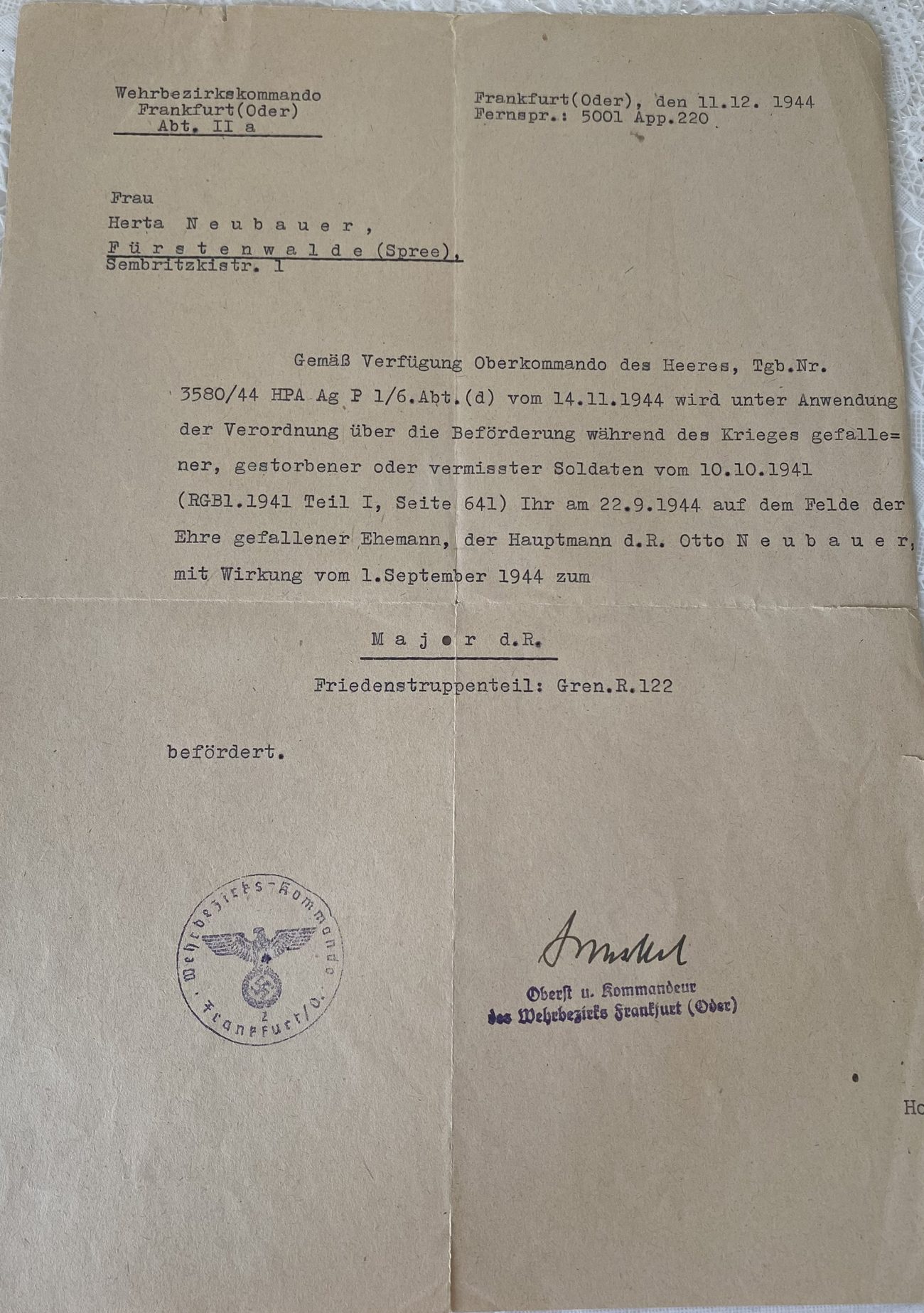
Herta Neubauer received the commander's letter in October 1944 as a certified copy. In December she was told that her husband had been promoted posthumously to Major of the reserve, with effect from 1 September 1944.
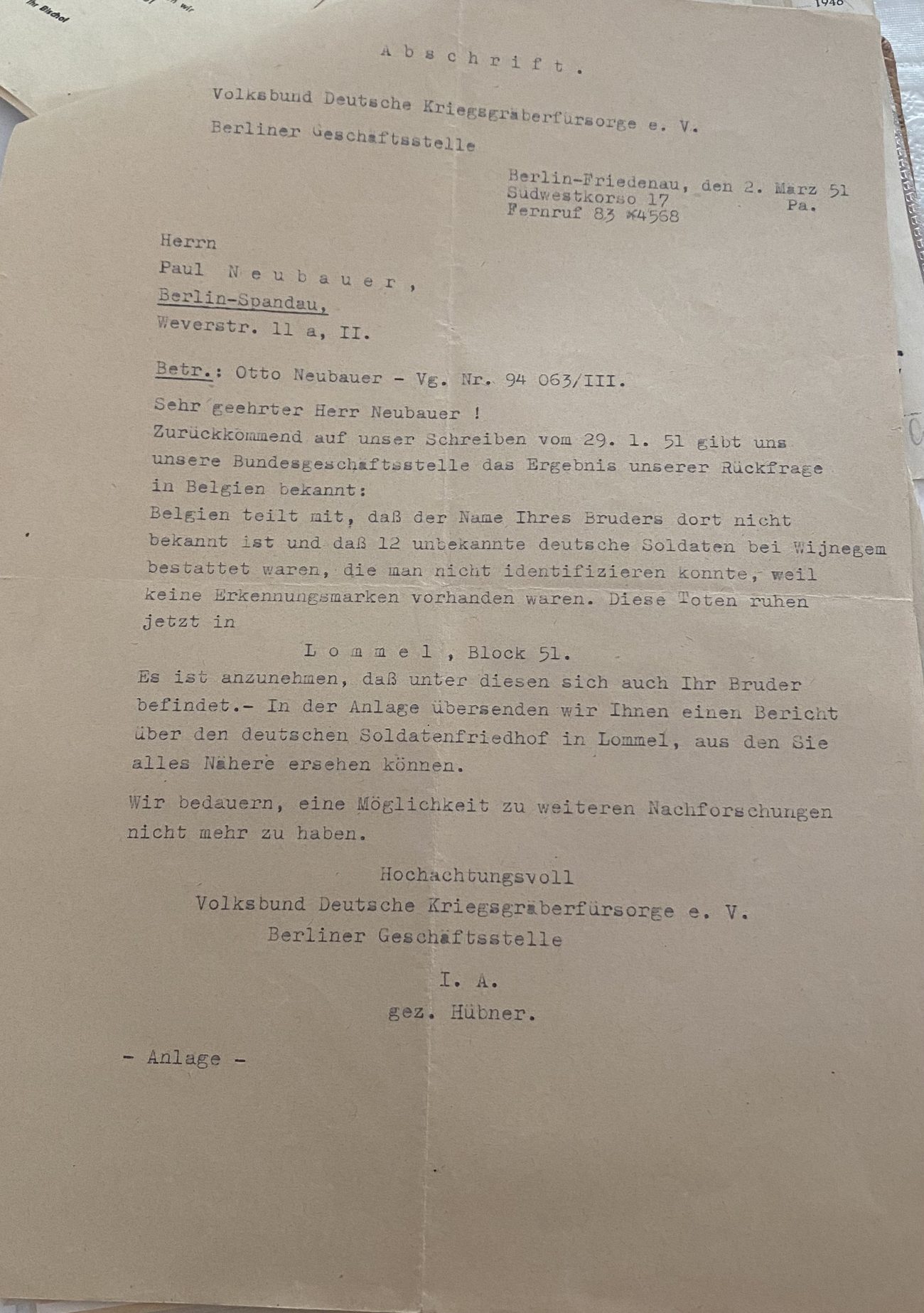
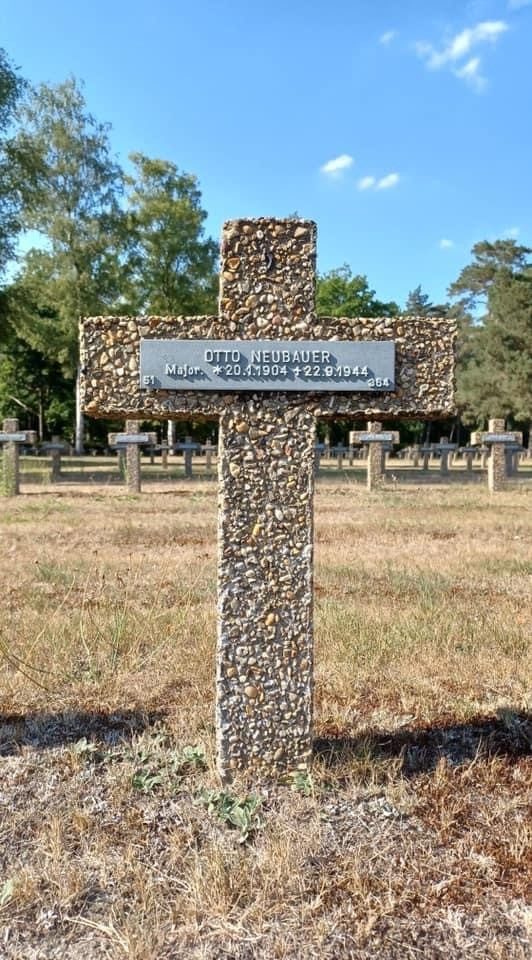
Probably because the Canadians had taken his identity disc, nothing on the body could identify him. When Otto's brother Paul searched for him after the war through the German War Graves Commission (Volksbund), the answer came in 1951: his name was unknown in Belgium. Twelve unknown German soldiers had been buried near Wijnegem who could not be identified because they had no identity discs. They had been reburied at Lommel, in Block 51. "It may be assumed that your brother is among them."
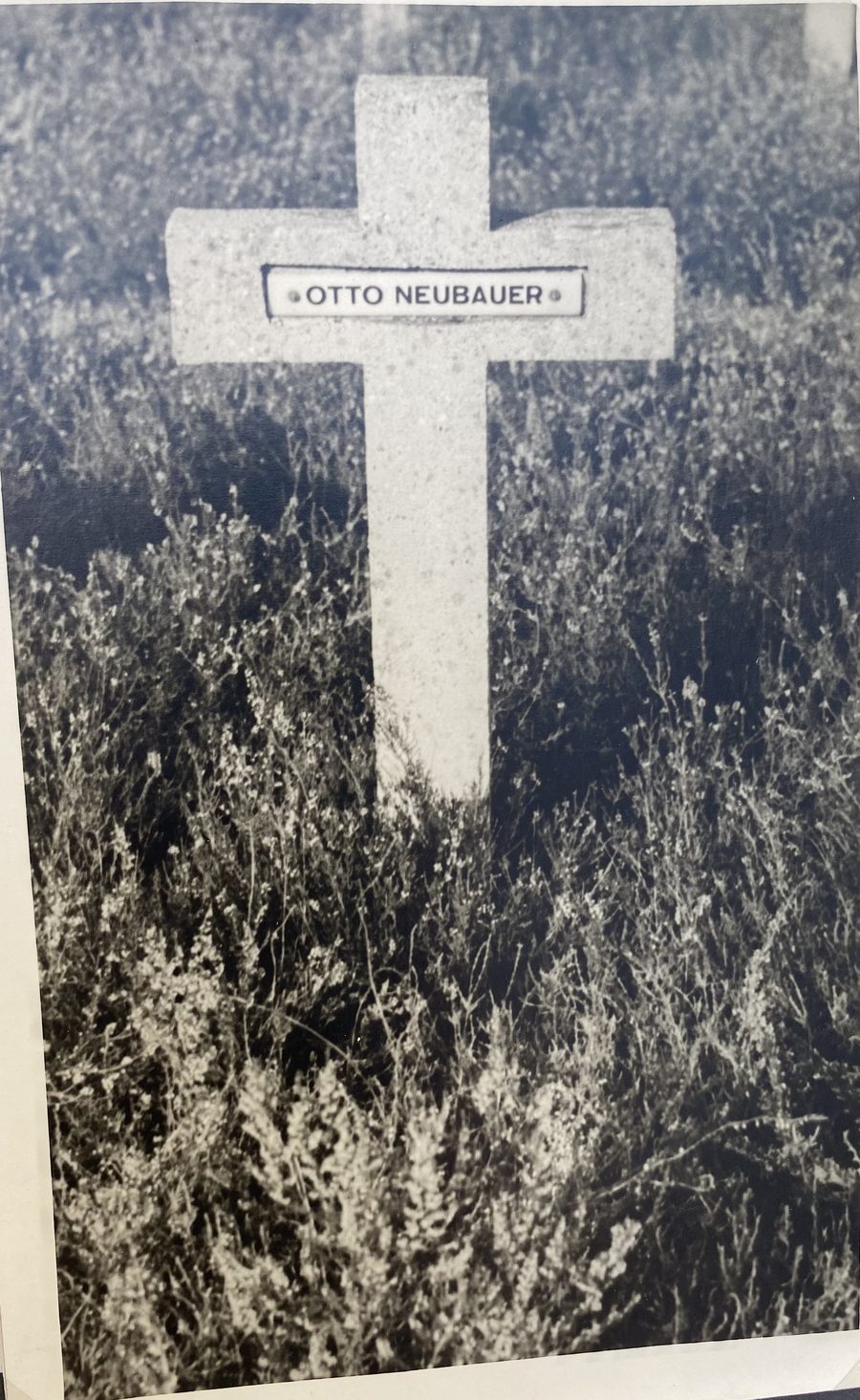
Today a cross at the German war cemetery in Lommel, in Block 51, bears his name, rank and dates. When and how he was identified by name there is not recorded in the family papers.
Sources
Family papers
- Service record book (Wehrpass), war service roll, transfer order of 23 July 1943, award certificates
- Letter from the regimental commander, 24 September 1944 (certified copy, Fürstenwalde, 24 October 1944)
- Notice from the district recruiting command Frankfurt (Oder), 11 December 1944
- Letter from the Volksbund Deutsche Kriegsgräberfürsorge to Paul Neubauer, 2 March 1951
- Photographs: portrait in uniform, grave cross then and now
- Photograph of the Gerlach family grave at the cemetery in Fürstenwalde
Archives and maps
- Library and Archives Canada: War Diary of the Calgary Highlanders, September 1944, with the intelligence summaries of the 5th Canadian Infantry Brigade (digitised as e011384059)
- GSGS 4040, France and Belgium 1:50,000, Sheet 24 & 34 "Brecht–Lierre", first edition 1943
- War diary of LXXXVIII Corps, Bundesarchiv-Militärarchiv Freiburg, RH 24-88: entry for 22 Sept 1944, pp. 535–540 (telephone calls 08:55 and 11:15, daily report 19:30, situation assessment); entry for 4 Sept 1944, 09:30, cited from Didden
- Appendices to the war diary of LXXXVIII Corps, RH 24-88/99: evening report of 22 Sept 1944, 16:45, to First Parachute Army (appendix B 305, image 310)
- Operational files of LXXXVIII Corps, RH 24-88/101: situation map "Einsatz 719. I.D., Stand 21.9.1944" (image 69)
- Karl Sievers, 719. Infanterie-Division (August – 18 September 1944), NARA, Foreign Military Studies, MS B-004 (cited from Didden)
- First Canadian Army, Intelligence Summary 99, 7 Oct 1944, with the captured diary of a corporal of 4th Company, GR 743 (cited from Didden)
Literature
- Jack Didden, Fighting Spirit. Kampfgruppe Chill and the German recovery in the West between 4 September and 9 November 1944, doctoral thesis, Radboud University Nijmegen 2012, pp. 57–58, 67, 162, 209–210 (online)
- Mark Zuehlke, Terrible Victory. First Canadian Army and the Scheldt Estuary Campaign, September 13 – November 6, 1944, Vancouver 2007, pp. 93–100
Further reading
Fürstenwalde
A stone at home
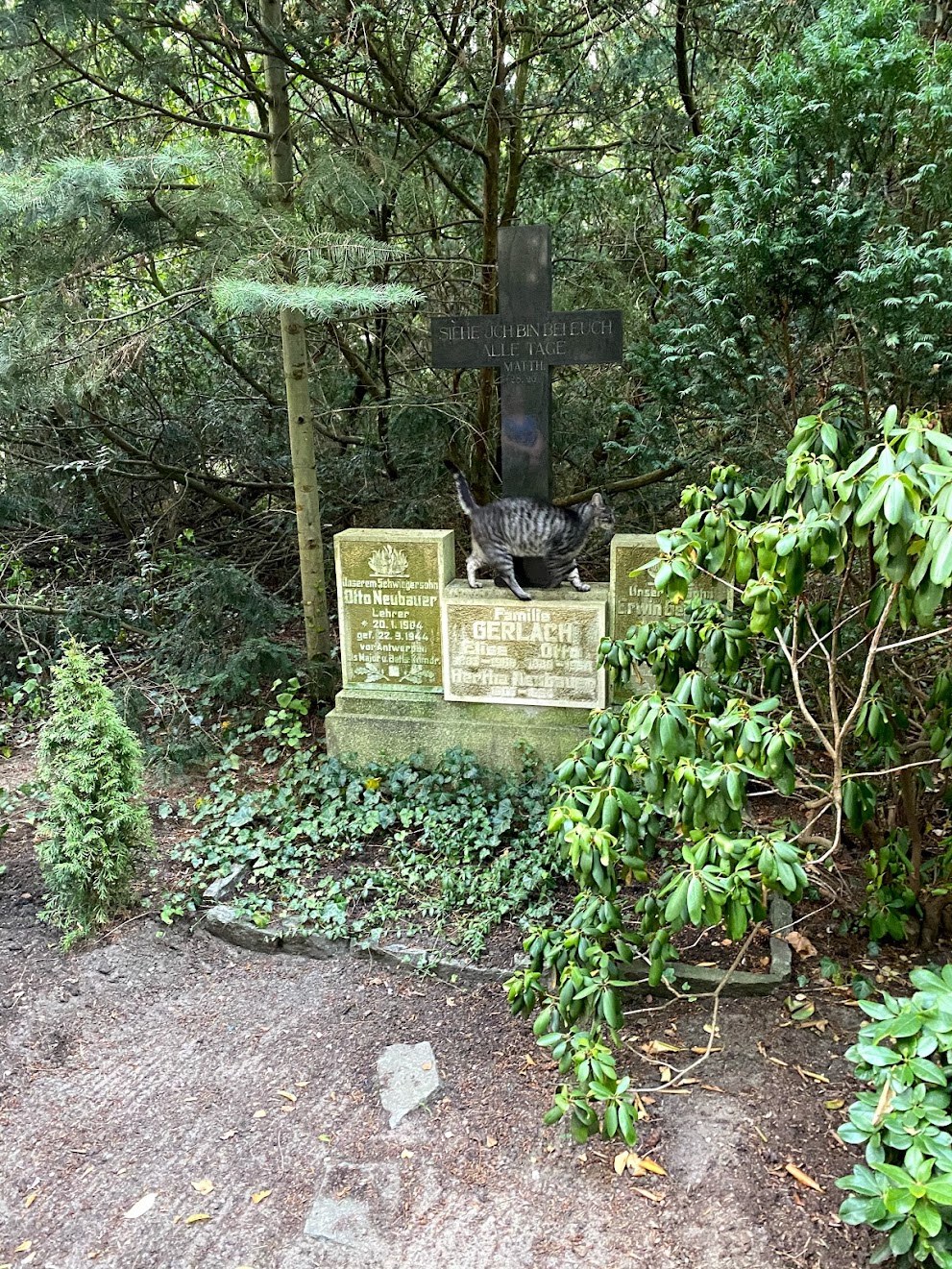
Otto Neubauer lies at Lommel. But he is remembered where he lived, too. At the cemetery in Fürstenwalde stands the grave of the Gerlach family, Herta's parents. Beside the stone bearing the names of Elise and Otto Gerlach, two smaller tablets carry inscriptions for their son-in-law and their son Erwin.
The left tablet reads: "To our son-in-law Otto Neubauer, teacher, born 20 January 1904, killed 22 September 1944 near Antwerp as Major and battalion commander." Herta Neubauer, who outlived her husband by many decades, is buried here as well. Her name is on the family stone.
Above the grave stands a plain cross with the words from the Gospel of Matthew: "Lo, I am with you always."